[00:00:00] Speaker A: Foreign.
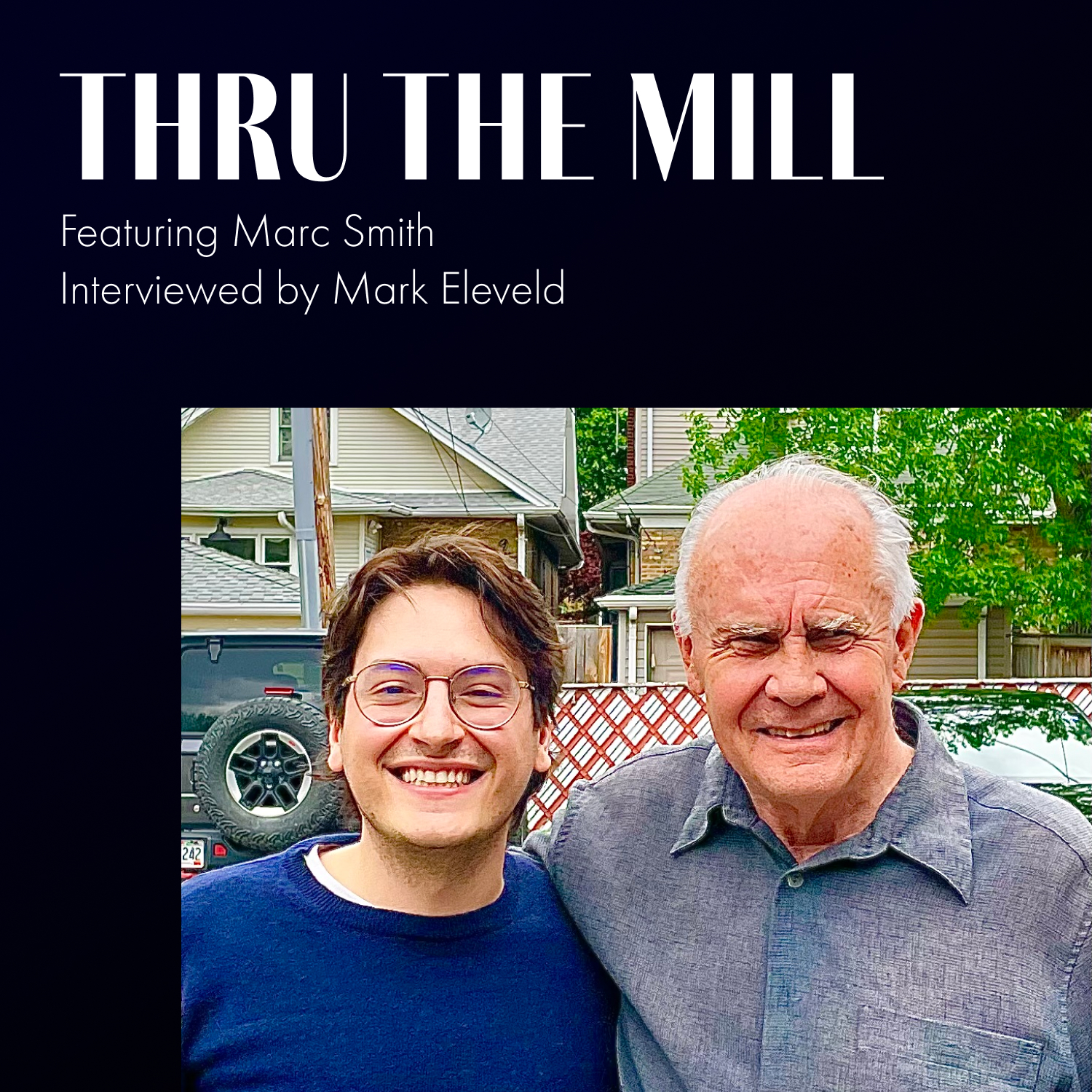
[00:00:10] Speaker B: Welcome to through the Mill. My name is Mark Eleveld. I'm the editor of the Spoken Word Revolution book series. This is a podcast about poetry slam, the origins. And as always, I'm here with the Chicago icon, Chicago personality, the inventor, founder of slam poetry. Usually cut me off by now.
[00:00:29] Speaker C: Well, we, we had to do three takes to get that. So I wasn't, wasn't going to cut you off. But yeah. Mark.
[00:00:36] Speaker B: Kelly Smith, everybody.
[00:00:37] Speaker A: Yeah.
[00:00:37] Speaker B: So we haven't done this in a while.
[00:00:39] Speaker C: No. And one of the reasons was that I was traveling. We, we were traveling.
[00:00:45] Speaker B: We were traveling.
[00:00:46] Speaker C: You came too. That's right. To France to tour for the grand opening of the House of Slam, the first slam museum in the world of league, the Slam. France have gone ahead and made their first museum. So that it was.
[00:01:02] Speaker B: So you were there to open up. The ribbon was out, the big scissors were out. The mayor of Tour, who arrived on his bicycle, who arrived on his bicycle and his jeans and I think the deputy mayor was, even showed up and everyone's on bicycles.
[00:01:17] Speaker C: Yeah, yeah. They're kind of cool people.
[00:01:19] Speaker B: Yeah.
[00:01:19] Speaker C: Very progressive administration there are doing.
[00:01:23] Speaker B: It's, it's a very artistic, rich town. Even just, I mean, I spent two hours a day just walking around and bumping into stuff that was fantastic. So I was thinking like all the different kind of international guests we've had and people I've known along the way that you've introduced me to, but you have trained and we were kind of talking to the Italian poet about this a little bit. But really you have kind of trained and they learned how to do this both philosophically and hands on and artistically.
[00:01:51] Speaker C: Yeah, they learn from all my mistakes.
But yes, that's been passed on how to organize and that the organization is a very, very important part to it. You know, in the slam world, sometimes I think it's the slam poets that are important people and they are important, but it's the organizers that have made slam become what the worldwide phenomenon is. And that's worldwide, you know, people that really devote their lives to finding the place, getting the people to get there, promoting it, teaching workshops, you know, because still to this day there's places where performance poetry. What's that? You know, they don't, they don't know what it is. So that's, that's kind of a real.
[00:02:37] Speaker B: But I was impressed even as many different countries that showed up to participate in their beautiful, beautiful finals night theater, which was gorgeous. When you were talking to all these different representatives of their country, you knew them, but you knew their predecessor and you also knew the person before them that, like, started that. It's not. We've talked about it on the podcast, but what you've been doing, whether. And I suspect it's consciously, but the way that these countries are establishing their slams is very much because of you and how you establish and organize yours. When you always came back, you always said they internationally. They were always more in touch with how your vision was than the US was.
[00:03:18] Speaker C: Well, at the end of the 90s, I decided to turn my attention to the overseas places, and I wanted to make sure that the.
The principles that started in Chicago didn't get lost, because we know that some places slam turns into this commercial entity and you're not real bad anymore, but it's. It lo. You know, some of it loses its spirit of what it's about. And one of the most important parts of it is that it's the. The community it creates and the people that connects. For instance, like this guy we got.
[00:03:55] Speaker B: Sitting over here who's with us today.
[00:03:56] Speaker C: Mark, listening to us talk.
[00:03:58] Speaker B: Do we have a guest here?
[00:03:59] Speaker C: We have a guest here. And he's the connections that you make, and then. Then he makes connections further on. You know, for me, that's the most important part about this whole thing, you know, sure, the art form. I love the art form. It's my art form. But it's really the connections that we've made everywhere and the connections that the slam events make with people, because you can't do what we do without really getting intimate with your audience and knowing them well. At least that's my idea of it.
[00:04:30] Speaker B: Everybody, Chuck Perkins, everybody. We don't have to wait any longer.
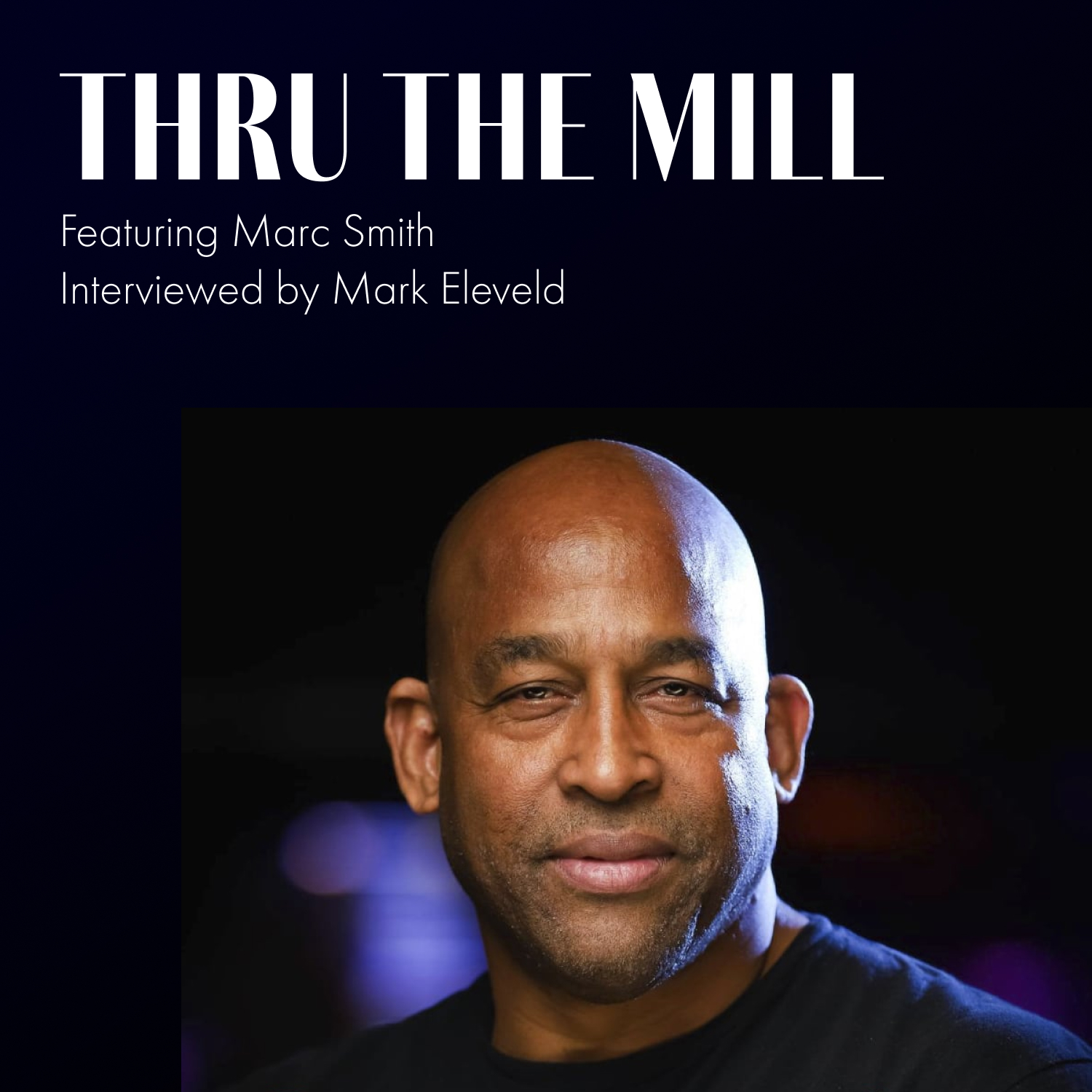
[00:04:33] Speaker A: It's Chuck Perkins, your P town Prince, your 17 wall troubadour, uptown Renaissance man. Holla at your boy Mark Ellavel. Mark Smith. What's happening?
[00:04:45] Speaker C: There you go.
[00:04:46] Speaker B: So Chuck is here because he's doing a performance at the Green Mill Jazz Lounge this weekend. He's also got this gorgeous, gorgeous book that he's kind of been working on for a while. It's kind of. This is a signature book for you called Beautiful and Ugly Too by. Who published it? I know this.
[00:05:01] Speaker A: The University of Louisiana at Lafayette.
[00:05:04] Speaker B: Yeah, yeah, yeah.
This is a gorgeous book, Chuck.
[00:05:07] Speaker A: Thank you very much.
[00:05:08] Speaker C: Mark.
[00:05:08] Speaker B: Is that right? You're here for the book? Kind of.
[00:05:10] Speaker A: I am here for the book, man. I'm going to the Green Mill where it started for me. I tell people all the time like, I'm from New Orleans, but I really cut My teeth as a poet in Chicago, right?
[00:05:23] Speaker B: Yeah.
[00:05:23] Speaker A: And I think like, I always want. I was always interested in poetry, but I didn't. Most of my friends in New Orleans were based on proximity. Right?
That's my boy. I love him. We grew up together. We don't have nothing in common. Yeah, we out. But so when I. If I bring up something like poetry, well, I tell you what, you do that, we're gonna go and play basketball or something like that. So, you know, when I got to Chicago, it's like, you know, you. Everything is a little more deliberate. All of my friends ended up being mostly poets, you know, and involved in other forms of. Of art, creative art. So, you know, being. Putting yourself in that environment is so wonderful because I mean, you can go and hear people do poetry and be inspired. You know what I'm saying? Like, you hear like some get. You go someplace and see a guy like Mark Smith on stage and it make you want to go home and write and become better, you know. So, I mean, I think Chicago is really where I begin to grow as a poet.
[00:06:20] Speaker C: So let's let back up a little bit because I want to know this, because I don't know this about you as a little kid.
Where did it start that your interest in writing and in poetry started? Where did that happen?
[00:06:35] Speaker A: You know what, there was a. A comedian. He calls himself a comedian. But now when I was a kid, I thought it was so funny. Now I don't think it's so funny. The guy name was Dolomite and he just had these little crass, vulgar narratives that rhymed. It was talking about animals and just. And so I had an older friend his who knew this thing called the Signified Monkey. That was his most famous thing, right? And my older friend, Lester Kelly, he. He knew the thing and so he would see me on the park and give me a verse.
[00:07:08] Speaker C: And so the Signified Monkey was a poem.
[00:07:11] Speaker A: It was, it wasn't a poem. It's kind of, it, it's. It's constructed like a poem. Right. But it's supposed to be like.
[00:07:17] Speaker C: It's a form.
[00:07:18] Speaker A: It's supposed to be humorous like a, like, like funny. Right, okay. And so, so Lester would give me a verse or two when I was about 11 years old and every other word is, you know.
Yeah, yeah, yeah. And as an 11 year old, of course, I'm like, I'm super.
So by the time I see Lester for about the fifth time, I got the whole thing down. Then I became a celebrity on the park. All the older Guys was like, hey, Chuck, come here. Tell us the signifying monkey, right? And I'm on stage, I'm doing the thing, and they laughing. And, you know, of course, I feel proud. And, you know, so initially, I wanted to write like that.
So I started trying to write the same kind of vulgar, crass, lewd, little rhyming things, but I never wrote any. And I would share it with my friends, and it was never anything. I was like, yeah, this is. And I said, that sucks, you know, But I said, you know, but there are things I want to say, and so I don't have to just say all of this silliness. I could try to, you know, really tap in and say, express myself. So that's when I started trying to, you know, I start writing poetry when I was in the 10th grade. My teachers would call me up every now and then to read a poem. And I remember I wrote this one poem called Mardi Gras. And I got up and did my poem, and my friend Marva, who sat next to me in class.
[00:08:40] Speaker B: Yeah, the clock.
[00:08:41] Speaker A: The class was like, yeah, that was good. And she's like, he didn't write that.
I read that poem in a magazine. I was like, what are you. What are you talking about? And in a way, I felt I was really pissed because now she thinks, right. Got all my classmates and my teacher thinking I'm fraudulent, right? But I was like, wow, my poem was good enough. She. It sounds like something that, you know. Yeah, that should have been in the Mac. Yeah, yeah, yeah. So that's kind of like how. How I started. But it was really. Once I got to Chicago, that's really when I began to.
[00:09:16] Speaker C: You know. It's an interesting thing you said. I want to ask you about it because I know you would always compose stuff in your. Your head and do the rewriting in your head.
[00:09:26] Speaker B: That.
[00:09:26] Speaker C: That. That started with the memorizing the signified monkey type thing, right?
[00:09:31] Speaker A: Ex. Yeah, I guess.
[00:09:32] Speaker C: Have you carried that through all the time? It always.
[00:09:35] Speaker A: I can't do that no more.
[00:09:36] Speaker C: Oh.
[00:09:37] Speaker A: I can't write like you did. I used to write like that, but now there's just too many distractions, you know? I mean, before, you know, I worked in sales.
I can get in my car and drive around. So if I get in my car, I have to drive someplace for an hour, and it's just me.
And now all I have to do is think about what I'm doing, right?
But now, you know, you drive for five minutes and the phone's ringing, so you can't I can't find that space where I could work like that.
[00:10:04] Speaker C: Correct me if I'm wrong. You used to come to the show, the Mill. It was all just in your head.
[00:10:09] Speaker A: It's never been written. Yeah, there were some poems that I hadn't gotten around to writing down yet. But Mark, I got to tell you this one thing about you and I though, you know, because the one thing that I really did appreciate about being in Chicago, you know, like me and Reggie and all, and all the rest of us, we would end up, you know, having breakfast and we always challenged each other in our poetry. We didn't just like, oh, that was great. And you know, we just keep complimenting each other and sometimes, you know, you dig in and you just find yourself defending a position. But when you get in your car and you're driving back home or you're in the shower and you. Every now and then somebody says something to you that actually makes sense, you know what I'm saying? And it could, that's the kind of stuff that could help to push you and, and to, and to help, you know, spur. Spur some growth. And so when market happened in a, in a more direct way, I remember I went to visit him when you and I were first becoming friends. I drove. You were living out in Berwin at the time, and, and I. We sitting in front of your house and I had wrote a poem about when I was shot at in college, you know, and the way I wrote it, you know, I was pretty excited about it. I was like, boom, boom. I dropped it on Mark. And you know, in a way I'm just waiting on him to say, wow, what a, what an awesome home and awesome, you know. He was like, yeah, I don't like it. I was like. I was like, what do you mean you don't like it? He was like, well, you know, it's like the, the theme that I've heard, you know, we've kind of like heard that before, you know what I'm saying? He said, now, man, I really like, you have some raw talent. It's all in there, you know what I'm saying? But you know, you can't, you know, you can't always just like hit the same note, you know, because we talked about it. You, you were like, anger is a much easier well to tap into. You know, a lot of people like first time poets, the shit that piss you off and make you angry, so easy to get there. But he said, when you get to the point where you doing like 50 minute shows or something like that. If you, if, if, if, if you like hitting the same note the, the whole time, after 10 minutes it's gonna seem like one long ass poem and your audience is gonna check out, you know, and honestly, Mark, I was telling that to somebody the other day. They read my book and they were just saying like the different kind of, you know, different kind of stuff that I'll talk about in different kinds of ways. I really think like up until this day that that conversation that you and I had kind of like influenced a lot.
[00:12:41] Speaker C: Well, it certainly shows in the book.
It's really a treasure. I haven't finished the whole thing, but it's a treasure. All the different places you go in it and it's really wonderful. But you know, go, let's, let's get a little look deeper because that day when you were came over to my place, we were on a mission to do something else, which was me getting a look inside of, of Chuck, you know, because he's an alpha male type thing.
So you know where we should go? We should, you know, we're saying a lot of stuff, people probably not following on the podcast, but let's, let's go. When the first night, when Mr. Chuck Perkins came to the show, which in what year?
[00:13:24] Speaker A: This is like 1996 or 90 or late 95 or early 96, something like that.
[00:13:29] Speaker B: And which, which as you tell this story, which Slam teams, National poetry slams teams.
[00:13:34] Speaker A: I was on this, I was on the Chicago slam team. Okay. And then I was on the Berwin. Yep. On the Berwin Slam Fitzgeralds. Yep. Yeah, Yep.
[00:13:42] Speaker B: Okay.
[00:13:43] Speaker A: And. Well, I was actually, I had a job. I just graduated from Xavier University. The people at craft foods told me how much money I was going to make. I thought I had it made. You know what I'm saying? I could do anything I want. I got my first paycheck because you sales were selling for crab, I was selling cheese.
But still I had a wife and a daughter and I was living in Evanston. I got my first paycheck and I was like, I think I'm gonna have to get another job.
So I ended up getting a job being a doorman at Tommy Nevins Irish Pub.
[00:14:16] Speaker B: Didn't know that, right?
[00:14:17] Speaker A: Yeah, man. And so the lady, Julie Studley, I think that's her name, she was like, helped manage the, the bar and she said her, she had some friends coming in town from St. Louis and they wanted to go hear poetry and that we were going to go to the Green Mill. Yeah. Up until that time I hadn't been to the Mill. I had heard about the Green Mill, but I hadn't been there. And so I got on the phone, I called the Green Mill, and Mark Smith answered the phone.
[00:14:43] Speaker B: Mark answered.
[00:14:44] Speaker A: I don't remember this wrinkle.
I thought, I think it was Mark Smith, because I asked about.
I asked about whether or not I would be able to read a poem. I just wanted to read a poem.
But when I got there, I was put in this in the slam. And then I won. Yeah. And then I had to come back the next Sunday to compete to get on the Chicago Slam team.
[00:15:06] Speaker B: What a trick that was.
[00:15:08] Speaker C: But see, he's cut out the most important part. So he comes in and the show has started.
And he comes in, he walks. His friends are up very close to the, to the stage. He comes up talking and talking and talking.
I go over there, listen, my friend, shut up.
[00:15:31] Speaker A: I was about to hit him with the two piece too, but I was like, you know what? I' ma chill.
No, I never think about hitting you with the two piece, Mark. I just shut up. And.
[00:15:40] Speaker C: Yeah, but that was, that was how we met.
I like, who the is this guy talking and talking? Doesn't he see what's going on here?
[00:15:49] Speaker A: And I gotta, I gotta tell you this, Mark.
And now I have my own club.
[00:15:54] Speaker C: I know.
[00:15:54] Speaker A: And I think of you almost every day because I'd be like, listen, I need everybody to respect the microphone. You know what I'm saying? And then I'll turn around and there's somebody, and I just, I won't go over and punch him upside the head. And I think about you every time. I guess this is what Mark was feeling when he. When I was the one in there running my mouth.
[00:16:14] Speaker C: Yeah. Let's go back and tell us about the things that being a regular at the Green Mill used have gone off to do many other things. Your record and everything. Because you, you left Chicago in a.
[00:16:28] Speaker B: Brand new movie on Netflix.
You are.
[00:16:31] Speaker A: Yeah. A king like me. Yeah.
[00:16:34] Speaker B: Do you know that? Really?
[00:16:35] Speaker A: I know a movie.
It's a documentary.
They just got me doing all the cussing. No, Mark, that's right, you would. That's right. You would be disappointed.
Your language.
[00:16:46] Speaker B: No, no, you're fantastic in it. The documentary, fantastic.
[00:16:50] Speaker A: You like it?
[00:16:50] Speaker C: So how did, how did the slam community, the nationals and all that influence?
[00:16:55] Speaker A: I think that the slam has had a big impact on me. But I think you personally, you know, I tell people about you all the time. I say, well, you, you know, Mark, is this kind of Blue Kyla, Irish, no nonsense kind of guy. You don't like all, you don't like the, you know what I'm saying? You don't like the, the fancy. Try to be a rock star.
And to be honest with you, I really think that has had an impact on me because I'm, when it comes to that, I'm very, very similar, you know what I'm saying? Like when you, when you come in my place, you know, just be regular, you know, be like a regular. And you know what? On my slam, I tell people all the time, when you come here, the first thing is to tell the mother freaking truth, don't try to sound like your favorite goddamn rapper because we don't care about. But I think I know that you, you had a, an influence there. I tell you what, when you look at this, when you read this book, you pick up a lot of books and some of the, a lot of the poets are like, I did this, I did this, I'm gonna do this, I'm gonna do that. But, but you know, I had a professor at Xavier and he was a father from, because Xavier is a Catholic university.
And he was teaching my African studies class, you know, and you know, young dude, I felt some type of way, the white father is teaching Africa. Yeah, give me a.
And so he gave me a book to read called God of the Oppressed. And you know, I had my own books I wanted to read at that time. But he said, chuck, if you don't. Because I said, I'm not reading something. The book this guy's giving, he said, if you don't read that book, you're gonna get, you're gonna fail this class. So I went and got the book by James cone, who's a very prominent African American theologian.
And I read the book and I was like, oh my God. I mean, the book almost made me re examine every conclusion I've ever had about religion, right? And as a young dude, because, because of who's telling me to read the book, I didn't want to read it. But then I read it and I loved it, you know, but this is what I wanted to, wanted to say about being able to sit down and talk to people.
See, I recognize right off the top that we all have our very, our limited cultural experiences, right? There's some things that, that we don't know about.
And so if you and I are having a discussion and you say something that may sound kind of crazy, but I'm a human being and I can feel where you coming from. And if you just saying it out of ignorance because you just don't know, but you're curious and you're interested in learning, then that's a good time for me to say, hey, well, if I were you, I would re examine that because of X, Y and Z. Now if I can tell that somebody is showing up being mean spirited and hateful. Yeah, that's the point. Well, if that's, if that's what it is, then no, we don't have to, we don't have to have this discussion. But it's, and it's a two way thing because sometimes I'm gonna find myself involved in a discussion and I'm ignorant about some stuff.
[00:20:00] Speaker C: Yeah.
[00:20:00] Speaker A: Or I may not fully understand all of the complexities and if I say one thing, but, but I feel like if you can sense that I'm. I'm not trying to be ugly and nasty, then help me and tell me and tell me why I shouldn't think the way I think, you know?
[00:20:19] Speaker B: When did you leave Chicago?
[00:20:20] Speaker A: I left Chicago in 2003. Holy cow, man. I spent over 20 years and it doesn't seem, it doesn't seem possible. It doesn't seem like that long. And so the club has been open for 15 years.
But before I opened the club, I had CD buckets of questions. No, no. It's one that's called A Love Song for Nola. It's on a German record label called Tricons. It's supposed to be the oldest independent record label in Germany. And, and so it's on, it's on that. I got a whole band. It was great.
[00:20:53] Speaker C: Did you go over there for that too?
[00:20:54] Speaker A: Yeah.
[00:20:55] Speaker C: You were in Germany?
[00:20:56] Speaker A: I was in Germany.
[00:20:57] Speaker C: With the whole band?
[00:20:58] Speaker A: With the, with the whole band, yeah.
[00:20:59] Speaker C: Wow.
[00:21:00] Speaker A: I went over and then.
Yeah, yep. And so, so I have that. But I got to tell you, when I opened up the club, it put a lot of the creative stuff on the back burner because it was not an easy process, you know, I mean, it required everything I had in me. A lot of times, you know, I'm just juggling money. I'm seeking something from here, paying it. I also used to host a daily radio show that Mark, I interviewed Mark on there one time before. It was called the Consciousness Hour with Chip Perkins. And so I did that like two hours a day, five days a week.
[00:21:36] Speaker C: How long, how many years?
[00:21:37] Speaker A: I did it for like about five or six years. Wow. Yep, yep. And I had the club going on at the same time. And so I just won a, an award in New Orleans for one of the essays in the New Orleans Press Club. And so I came in first place in the lifestyle section. And it was actually one of my friends who write for online magazine called the Lens.
She's the one who submitted it. And then, and then I won, you know, so, yeah, I got a lot of irons in the fire.
[00:22:07] Speaker B: So thanks, Chuck, and congrats on the beautiful book called Beautiful and Ugly too.
[00:22:12] Speaker A: Louisiana Press, University of Louisiana at Lafayette. Lafayette. And you can find
[email protected] and what.
[00:22:20] Speaker B: A magnificent thing that you ran out of your first printing already.
[00:22:23] Speaker A: Yes, you did.
[00:22:24] Speaker C: For real.
[00:22:24] Speaker A: Yep, yep, yep. Yeah.
[00:22:27] Speaker C: Here's a postscript to our episode.
Our great friend Tony Fitzpatrick, the famous artist and poet and was a doorman at the Green Mill at one time. He passed on just a few weeks ago, so just want to put that in there.
[00:22:47] Speaker B: One of our guests and one of.
[00:22:48] Speaker C: Our guests from a past podcast.
So.
[00:22:54] Speaker B: Thinking about you, Tony. Yeah, you've been listening to through the Mill, our podcast about the poetry slam. My name is Mark Eleveld. I'm the editor of the Spoken Word Revolution Books. Emily Calvo is here with us. She named the podcast. It's an anthology she's been working on since the early 90s. And we're here with Mark Kelly Smith, the founder of Poetry Slam. We're going to be bringing some podcasts and shows to you to hear the origin stories from a bunch of different poets and a bunch of different organizers. Our director Hugh's over there in the corner. I hope you had a good time and we'll talk to you soon.